

Every mobile shop has a shelf of phones nobody asks for any more. Last season’s model, the one that was selling fast six months ago, now sits in the cabinet while customers walk past it to ask about the new release. The shop paid good money for those phones — and every week they sit there, they are worth a little less.
That is the old-stock problem. A new model arrives, the old one loses value, and the shopkeeper has to decide: cut the price and sell, or hold on and hope. Without a record of what each phone cost and what it is worth now, that decision is a guess — and a wrong guess means either a loss on every sale, or a shelf full of phones nobody will ever buy.
The model nobody asks for any more

In Smart POS, every phone on the shelf has its own record: when it arrived, what it cost, and how long it has been sitting there. The owner can see, at a glance, which models have stopped selling and which ones are still moving. The shelf stops being a mystery and becomes a list — this sells, this does not, this has been here too long.
That list is what the shop needs before the next order. A model that has not sold in two months should not be ordered again, however good the supplier’s offer sounds. The record says what the shelf actually holds, and the owner buys what the customers actually want.
The price drop, recorded not guessed
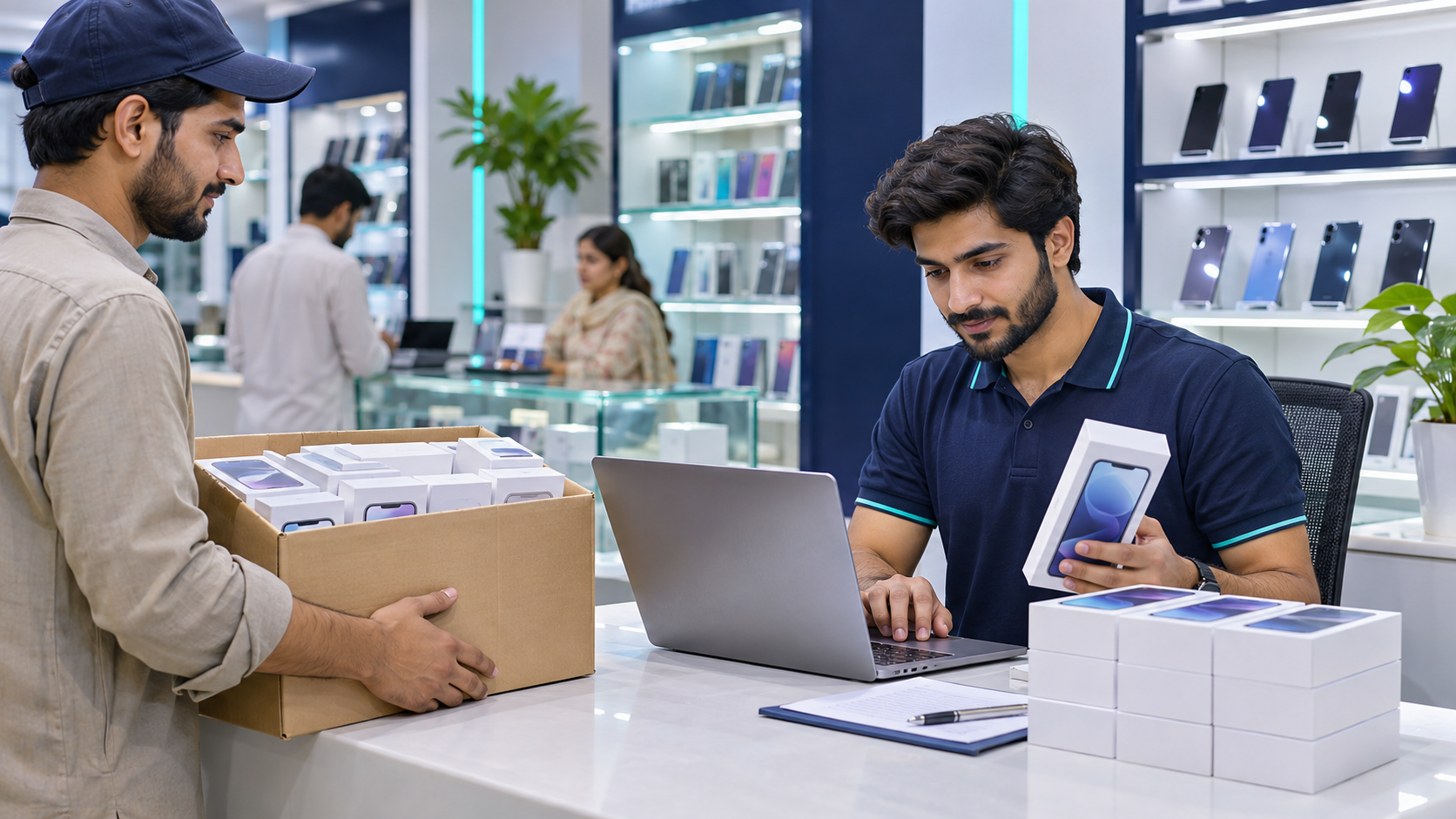
When a price has to drop, it should drop on the record, not in the shopkeeper’s head. In Smart POS, the new price is set against the phone’s cost, so the owner knows exactly what the margin is — whether the phone still earns a little, breaks even, or is sold at a small loss to free the money. A price cut that is recorded is a decision. A price cut that is remembered is a hope.
That matters because a phone’s value falls fast. The model that was worth a good price last month may be worth far less today, and the shop that waits too long to cut the price loses more than the shop that cuts early. The record shows the cost, the price, and the time — and the owner can act while there is still a margin to protect.
Cleared honestly, not hidden in the corner
Old stock that is cleared honestly still earns. A fair price, a clear offer, a phone sold to a customer who knows what they are getting — that is better than a shelf full of dead stock and a cabinet full of hope. In Smart POS, clearance sales are billed like any other sale, so the shop knows exactly what the old stock brought back, and what it cost to hold it.
That honesty is also how the shop learns. If the same models keep ending up on the clearance shelf, the record shows it — and the owner orders fewer of them next time, or none at all. The shelf stops filling with phones nobody wants, because the buying follows the evidence.
With every phone on the record, every price drop a decision, and every clearance sale counted, a mobile shop can let old models go without losing its nerve — or its money. The shelf stays fresh, the cash keeps moving, and the next new model arrives to a shop that is ready for it.
Smart POS is built for mobile shops in Pakistan: IMEI records, price history, and stock reports that keep every shelf honest.
See how Smart POS works for mobile shops — Smart POS for Mobile Shop. Try free for 15 days, no credit card required.