
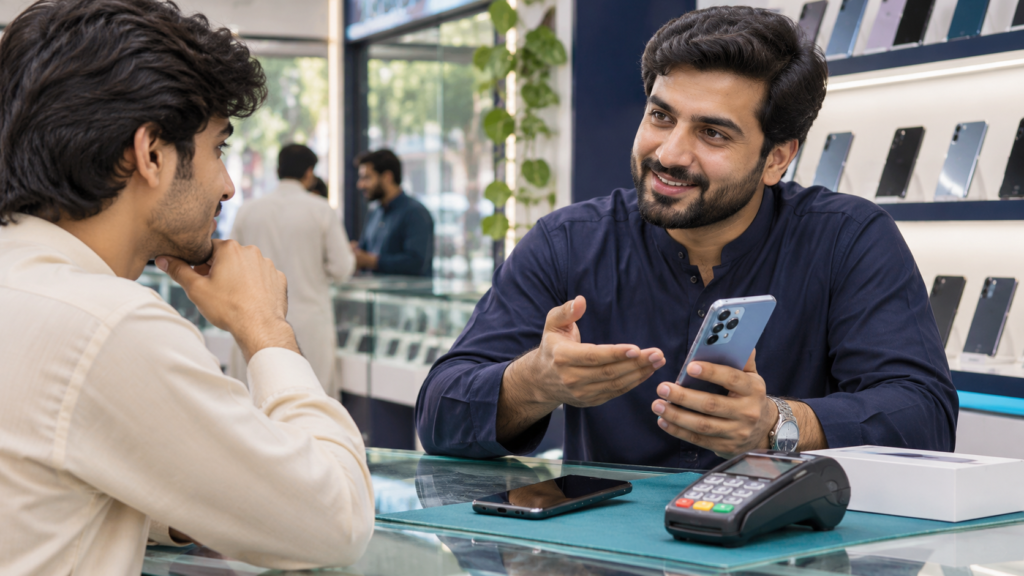
A customer walks into a mobile shop with a phone to sell. It is a good phone, they say, barely used, nothing wrong with it. The shopkeeper checks it, agrees a price, and buys it. Two days later, the same phone is sold to another customer — and comes straight back. The battery dies in an hour. The screen has a fault nobody noticed. Now the shop has an angry customer, a phone it cannot sell, and a loss it cannot recover.
That is the used-phone problem. A new phone comes in a sealed box, with a warranty and a known price. A used phone comes with a history nobody can see. Its condition, its faults, its real value — all of it has to be judged in a few minutes at the counter, and judged right. Get it wrong once, and the loss wipes out the profit on a dozen good sales.
Every used phone, with its own record

In Smart POS, every used phone that is bought gets its own record: the IMEI, the condition, the price paid, and the date it was bought. Nothing is left to the shopkeeper’s memory. When the phone is sold on, that record is still there — what was paid for it, what condition it was in, and who sold it to the shop.
That record protects the shop in both directions. If the phone comes back with a fault, the shop can see exactly what was recorded when it was bought — and whether the fault was there then, or happened after. If a customer claims they were promised something different, the bill shows what was actually agreed. The argument that used to take an afternoon is settled in a minute.
The trade-in, priced once and honoured
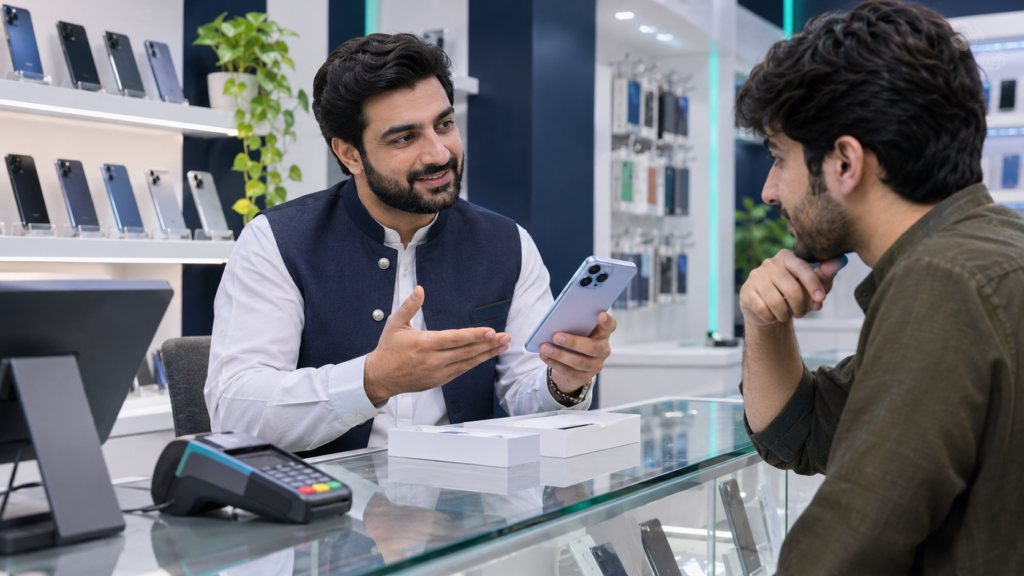
Most used phones arrive as a trade-in: the customer hands over an old phone and takes a new one, paying the difference. That difference is where disputes are born. The customer remembers a higher trade-in value than the shopkeeper does. The shopkeeper remembers conditions that were never written down. By the time the new phone is in the customer’s hand, both sides are unhappy.
With the trade-in recorded on the bill, the agreed value is written down once and honoured. The old phone’s IMEI, condition and value are on the same bill as the new phone’s price, so the customer can see exactly what they paid and why. There is nothing to remember differently later, because the record is in front of both of them at the time.
Selling it on, without the argument
When the used phone is sold to its next owner, the warranty and condition go on the new bill too. The buyer knows what they are getting, what is covered, and for how long. If the phone comes back, the return is a record, not a fight — the shop can see when it was sold, in what condition, and what was promised.
That honesty is good business. Customers who buy a used phone from a shop that records everything come back, because they were treated fairly the first time. And the shop can buy used phones with confidence, because every phone it buys is recorded, priced, and traceable — from the person who sold it to the person who buys it next.
With every used phone recorded by IMEI, every trade-in priced once and honoured, and every resale carrying its own warranty and condition, a mobile shop can buy and sell used phones without the risk that used to come with them.
Smart POS is built for mobile shops in Pakistan: IMEI records, trade-in billing, and a record for every phone that passes through the counter.
See how Smart POS works for mobile shops — Smart POS for Mobile Shop. Try free for 15 days, no credit card required.