

A mobile shop in Pakistan is really two businesses sharing one counter. The first is selling phones. The second is everything after the sale: repairs, accessories, and the customers who come back because their screen is cracked, their battery is dead, or their charger has stopped working. The second business is often the more profitable one — and it is the one most likely to be run from memory.
That is the repair problem. A phone comes in for a screen, the part is ordered, the customer is told a time, and then the phone sits on a shelf while nobody remembers whose it is, what was agreed, or whether the part has arrived. The customer comes back twice, then goes to the shop down the road — and tells their friends why.
A repair is a promise
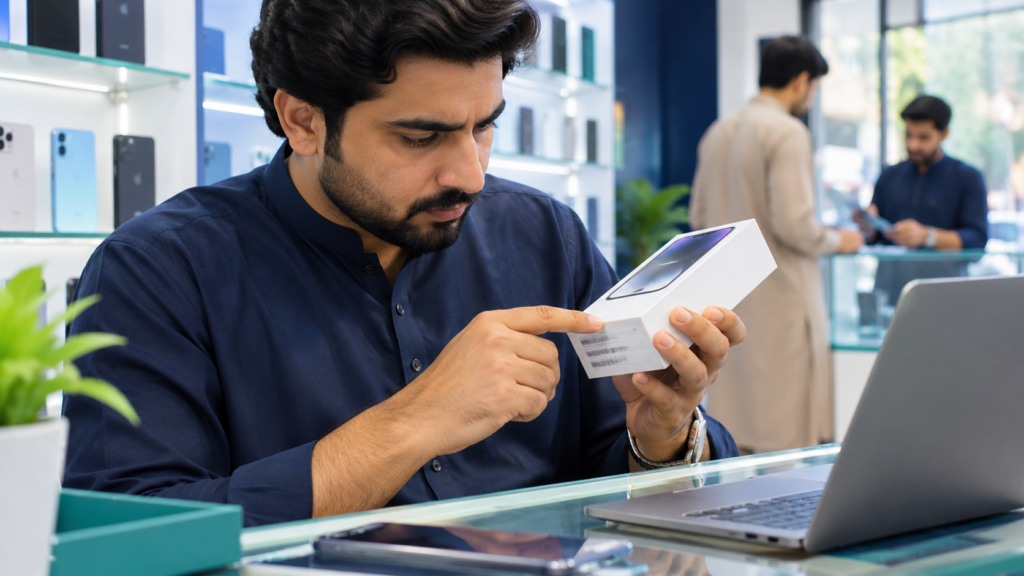
Repair records in Smart POS keep each job with the customer’s details, the phone’s IMEI, and the status of the work. When the customer asks, the answer is a lookup, not a search through the shelf: the phone is here, the part has arrived, the work is done, and this is what is owed. Nothing sits forgotten, and no customer has to come back three times to ask.
That record also keeps the parts honest. A screen, a battery, a charging port — each one is stock, with a cost and a quantity, and when it is fitted, the stock drops. The owner can see which parts are used most, which ones to keep in stock, and whether a repair actually earned what it should have. A repair business that cannot see its parts cannot price its work.
Accessories: small items, real money
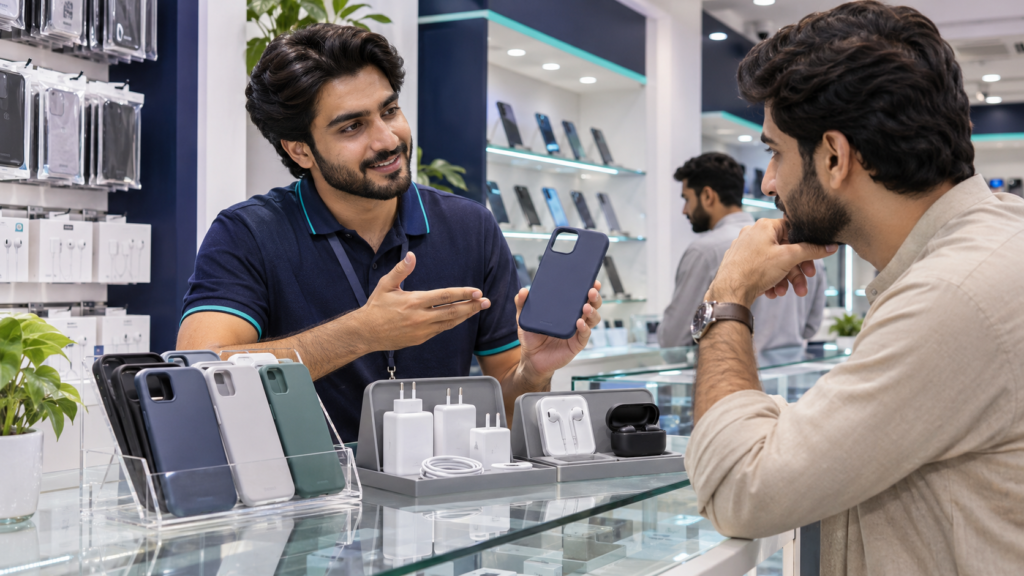
Accessories are the other half of the second business: covers, chargers, protectors, hands-free sets. Each one is small and cheap, and together they are real money — the kind of money that leaks when nobody counts it. Item-wise stock with barcode billing keeps accessories counted, so the owner knows what was sold, what is left, and what is walking out of the shop without a bill.
Sales reports show which accessories actually sell, and when. A cover that sells every day is worth shelf space. One that has not moved in a month is not. That is how a small counter stops being a jumble of packets and becomes a business that earns.
Exchange and second-hand, recorded properly
Many mobile shops also take phones in exchange or sell second-hand handsets, and each one is a record of its own: which phone, which IMEI, what was paid for it, and who it was sold to. When those records sit with the sale, an exchange is a clean transaction instead of a future argument — and the shop knows exactly what it holds, in new stock and in second-hand stock, at any moment.
With repair records, parts stock, and accessory billing in one system, the second business at the counter runs as properly as the first. Phones are repaired on time, accessories are counted, exchanges are recorded, and the customers who came back for a repair keep coming back for their next phone too.
Smart POS is built for mobile shops in Pakistan: IMEI-wise stock, repair records, and accessory billing, with customer records that keep the whole shop straight.
See how Smart POS works for mobile shops — Smart POS for Mobile Shop. Try free for 15 days, no credit card required.